AI in Marketing: Trends Defining the Future
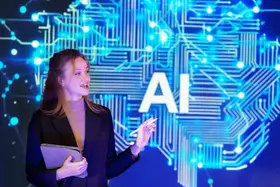
AI and data analytics are transforming digital marketing by enabling smarter decision-making, personalized customer experiences, and precise ROI measurement. By combining automation with creativity, businesses can enhance engagement, optimize campaigns, and stay competitive in an increasingly AI-driven landscape.
AI in Digital Marketing: Transforming Creativity, Engagement & ROI
Artificial Intelligence (AI) and data analytics are revolutionizing digital marketing, reshaping how brands connect with audiences, create campaigns, and measure performance. What was once considered the future is now the present—AI is helping businesses across industries deliver smarter, faster, and more effective marketing strategies.
In competitive markets like Dubai, adopting AI-driven marketing solutions is no longer optional. It’s essential for staying relevant, improving customer engagement, and maximizing return on investment (ROI).
1. From Intuition to Data-Driven Marketing
Traditional marketing relied heavily on guesswork and manual analysis. Today, AI-powered tools and machine learning enable businesses to:
Predict customer behavior
Analyze large datasets in real time
Identify trends and opportunities
Optimize campaigns instantly
By leveraging data-driven marketing, brands can understand customer intent at a deeper level and create personalized experiences that drive conversions. This shift from reactive to predictive marketing gives businesses a powerful competitive edge.
2. Redefining Creativity with AI
Creativity remains at the core of successful marketing, but AI is transforming how it’s executed. Modern tools support content creation, design, and campaign optimization by:
Generating content variations for different platforms
Testing creatives before campaign launch
Personalizing messaging for specific audiences
Rather than replacing human creativity, AI enhances it. By automating repetitive tasks, marketing teams can focus on storytelling, brand strategy, and emotional connection—key elements that make campaigns impactful and memorable.
3. Enhancing Customer Engagement
Today’s consumers expect personalized, real-time interactions. AI makes this possible through:
Chatbots and automated customer support
Predictive product recommendations
Voice search optimization
Behavioral targeting
AI-driven tools also analyze customer sentiment, helping brands quickly understand feedback and adapt their strategies. This level of responsiveness improves customer satisfaction and builds long-term loyalty.
4. Improving ROI with Advanced Analytics
AI brings precision to marketing performance measurement. Instead of relying on basic metrics, businesses can now use:
Advanced attribution models
Real-time performance dashboards
Predictive analytics for budget allocation
This allows companies to track exactly how campaigns contribute to conversions, sales, and brand growth. The result is higher ROI, smarter spending, and better decision-making.
5. The Future: AI, Voice Search & GEO
As AI continues to evolve, new trends like Generative Engine Optimization (GEO) are shaping the future of SEO and digital marketing. Businesses must optimize content not only for traditional search engines but also for:
Voice assistants
AI chatbots
Intelligent search platforms
Early adoption of these strategies ensures better visibility and long-term success in an increasingly AI-driven digital landscape.
Conclusion
AI and data analytics are redefining modern marketing by combining technology, creativity, and strategy. Businesses that embrace AI can deliver personalized experiences, improve engagement, and achieve measurable growth.
By integrating AI-driven insights with creative execution, brands can stay ahead of the competition and build meaningful connections with their audiences.
Frequently Asked Questions
Q1: How is AI used in digital marketing?
AI is used for data analysis, customer segmentation, content creation, personalization, and campaign optimization to improve marketing performance.
Q2: Does AI replace human creativity in marketing?
No. AI enhances creativity by automating repetitive tasks, allowing marketers to focus on strategy, storytelling, and innovation.
Q3: How does AI improve customer engagement?
AI enables real-time personalization, chatbots, predictive recommendations, and sentiment analysis to create more meaningful interactions.
Q4: Can AI increase marketing ROI?
Yes. AI improves ROI by optimizing campaigns, tracking performance accurately, and helping businesses allocate budgets more effectively.
Q5: What is predictive marketing?
Predictive marketing uses AI and data analytics to forecast customer behavior and trends, enabling proactive decision-making.
Q6: What is Generative Engine Optimization (GEO)?
GEO is the practice of optimizing content for AI-driven search platforms, including voice assistants and chat-based search engines.
Q7: Why is AI important for businesses in competitive markets?
AI provides insights, automation, and personalization, helping businesses stay competitive, improve efficiency, and drive growth.
Ready to Get Started?
Let's discuss how we can help you achieve your goals