
AIO vs AEO: Which Optimization Strategy Should You Use?
Learn the difference between AIO (AI Optimization) and AEO (Answer Engine Optimization) and how combining them can future-proof your SEO strategy for AI-driven search engines like Google SGE and Bing AI.
In today’s digital era, traditional SEO isn’t enough. With AI-driven engines like Google’s Search Generative Experience (SGE), Bing AI, and voice assistants, it’s not just about keywords and backlinks anymore — it’s about answering questions accurately and being understood by AI systems.
Two strategies are critical for this AI-powered search landscape:
AIO (AI Optimization): Making your content AI-readable and indexable.
AEO (Answer Engine Optimization): Structuring your content to become the direct answer in AI and voice search results.
Understanding and implementing both can maximize your online visibility, engagement, and authority in 2026 and beyond.
The Evolution of SEO: From Rankings to Relevance
For years, SEO success was measured by keyword density, backlinks, and technical tweaks. Today, AI-driven search prioritizes relevance, authority, and clarity.
Modern SEO is no longer just about appearing on page one; it’s about being the best answer to a user’s query.
What is AIO (AI Optimization)?

AI Optimization (AIO) focuses on making your website and content understandable and indexable by AI-powered search engines.
Key Uses of AIO
Structuring content for AI comprehension
Optimizing metadata and schema for indexing
Enhancing semantic context for AI-generated results
Improving technical SEO to support AI crawling
Benefits of AIO
Enhanced AI-driven search visibility
Supports voice and conversational search
Future-proof content strategy
Data-driven optimization for better indexing
Limitations of AIO
Requires semantic and technical expertise
Needs continuous updates for evolving AI algorithms
May require complementary strategies like AEO for maximum impact
What is AEO (Answer Engine Optimization)?
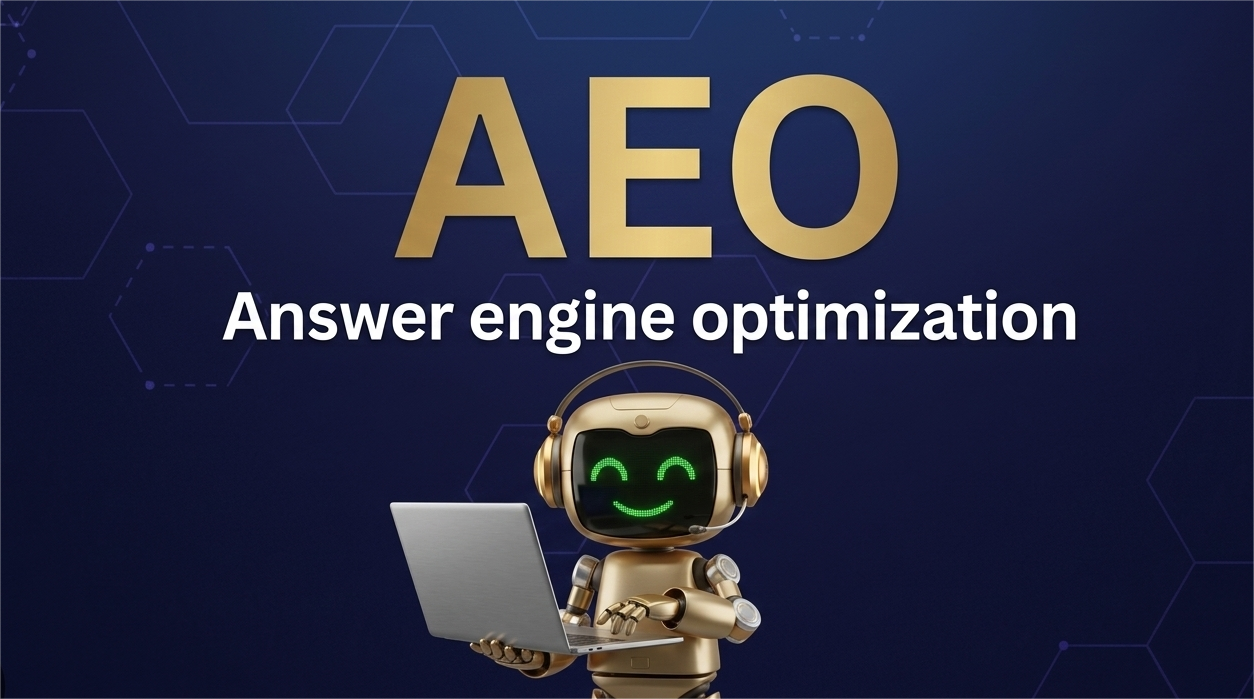
Answer Engine Optimization (AEO) is a strategy designed to make your content the chosen answer in AI-powered and voice search results.
Unlike traditional SEO, AEO focuses on structuring content to directly respond to user questions.
Key Uses of AEO
Capturing featured snippets or position-zero results
Structuring FAQs, how-to guides, and Q&A sections
Optimizing for voice search and conversational queries
Aligning content with E-E-A-T (Experience, Expertise, Authority, Trustworthiness)
Benefits of AEO
High visibility in AI-generated responses
Increased trust and brand authority
Higher click-through rates from users seeing direct answers
Better performance for voice search
Limitations of AEO
Requires highly structured and authoritative content
Best suited for content that answers questions quickly
ROI tracking can be challenging with zero-click searches
How AIO and AEO Work Together
AIO and AEO are complementary strategies:
AIO: Ensures AI systems can read, index, and understand your content.
AEO: Structures content to appear as the preferred answer in AI-driven and voice searches.
Example Workflow
Use AIO for:
Schema markup
Meta descriptions
Technical optimization
Apply AEO for:
FAQ sections
Concise, conversational answers
Authority-backed content with citations
Together, they ensure your content is found, understood, and trusted in both traditional and AI-powered search environments.
Full-Stack SEO: Combining AIO, AEO, and Classic SEO
Full-stack SEO integrates:
Technical SEO: URL structure, responsive design, schema, site performance
On-page & Off-page SEO: Content, backlinks, headings, alt text
Content Strategy: Blogs, social posts, FAQs, and guides
AIO: AI-readable, semantically structured content
AEO: Direct-answer content for AI and voice search
Brand & UX: Google Business Profile, social media engagement
The goal is to ensure your content is both discoverable and authoritative, positioning your brand as a trusted source in search results.
Why Combine AIO and AEO?
AIO ensures AI systems understand and index your content effectively.
AEO ensures your content is presented as the definitive answer in AI-generated responses.
Together, they maximize visibility, engagement, and brand authority in AI-driven search.
Frequently Asked Questions
Q1: What is the main difference between AIO and AEO?
AIO focuses on AI readability and indexing, while AEO focuses on structuring content to appear as the chosen answer in AI and voice search.
Q2: Can AIO and AEO be used together?
Yes. Using AIO to make content AI-friendly and AEO to structure answers ensures maximum visibility across AI-driven search platforms.
Q3: Which content is best for AEO?
Content that provides clear, concise answers, such as FAQs, how-to guides, and structured Q&A sections.
Q4: How do I measure AIO and AEO success?
AIO: AI indexing, semantic clarity, technical SEO metrics
AEO: Featured snippet appearance, AI citation visibility, voice search performance
Q5: Will AIO replace traditional SEO?
No. AIO complements traditional SEO but does not replace it. A balanced strategy combining classic SEO, AIO, and AEO is ideal.
Q6: Is one more important than the other?
Both are important. AIO supports AI understanding, and AEO ensures your content is chosen as the answer. Together, they future-proof your SEO strategy.
Ready to Get Started?
Let's discuss how we can help you achieve your goals