
GEO vs SEO: What Marketers Need to Know About the Future of Search
Search behavior is evolving quickly. With the rise of AI-powered search tools, digital marketers are no longer optimizing content only for traditional search engines. A new discipline called Generative Engine Optimization (GEO) has emerged, designed to help content appear inside AI-generated answers rather than just traditional search results. Both Search Engine Optimization (SEO) and GEO aim to increase website visibility, but they operate in different environments. SEO focuses on ranking webpages in search engine results pages (SERPs), while GEO focuses on ensuring content is referenced or cited in AI-generated responses. For marketers and SEO professionals, understanding both SEO and GEO strategies is essential to keep content visible across traditional search engines and modern AI-driven platforms.
What is SEO (Search Engine Optimization)?
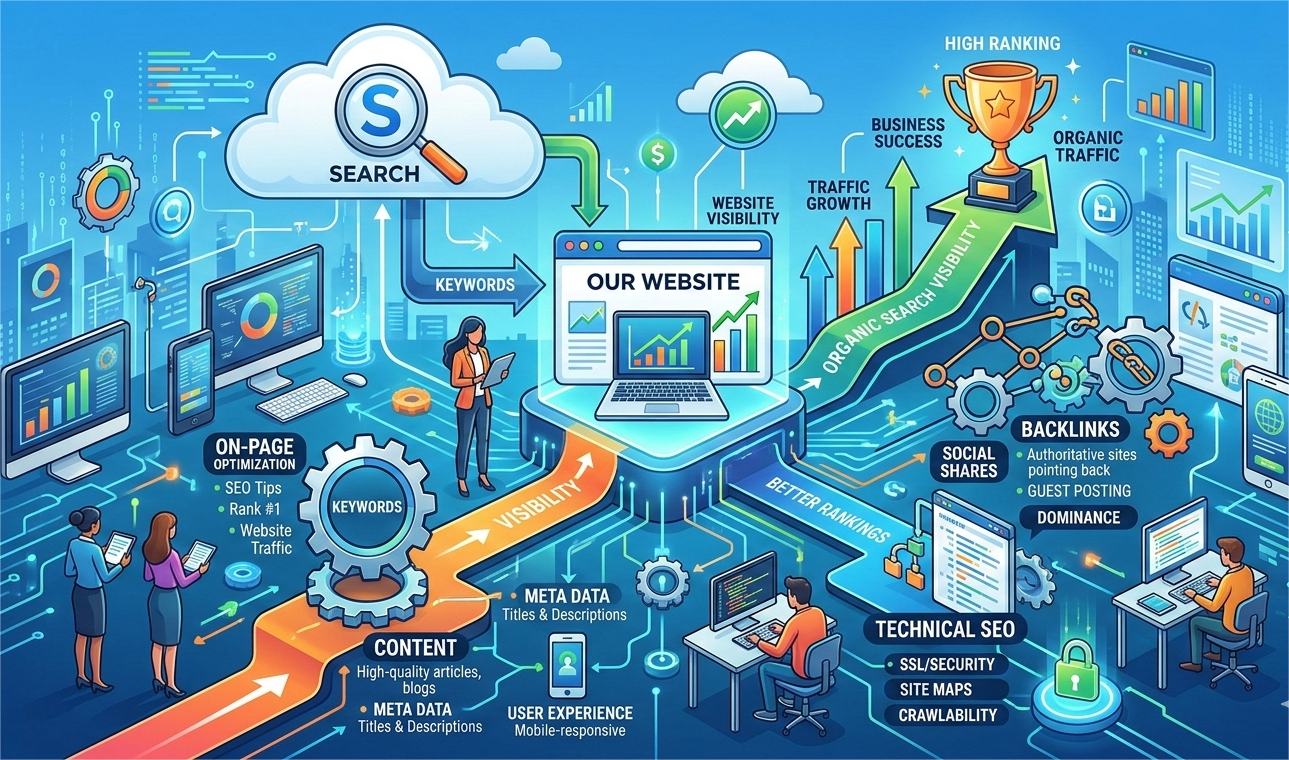
Search Engine Optimization (SEO) is the process of optimizing a website so it ranks higher in traditional search engines such as Google and Bing.
SEO focuses on helping search engines crawl, index, and rank webpages based on relevance and authority. When users search for information, these engines display a list of results where websites compete for top positions.
Key SEO Strategies
To improve rankings, SEO typically includes:
Keyword research and optimization
High-quality content creation
On-page optimization (titles, meta descriptions, headers)
Technical SEO improvements
Backlink building
Internal linking structure
The main goal is to increase organic traffic by appearing as high as possible in search results.
Common SEO Metrics
SEO performance is usually measured using metrics such as:
Click-through rate (CTR)
Bounce rate
Time on page
Organic traffic
Keyword rankings
These indicators help marketers understand how users interact with their content in traditional search environments.
What is GEO (Generative Engine Optimization)?
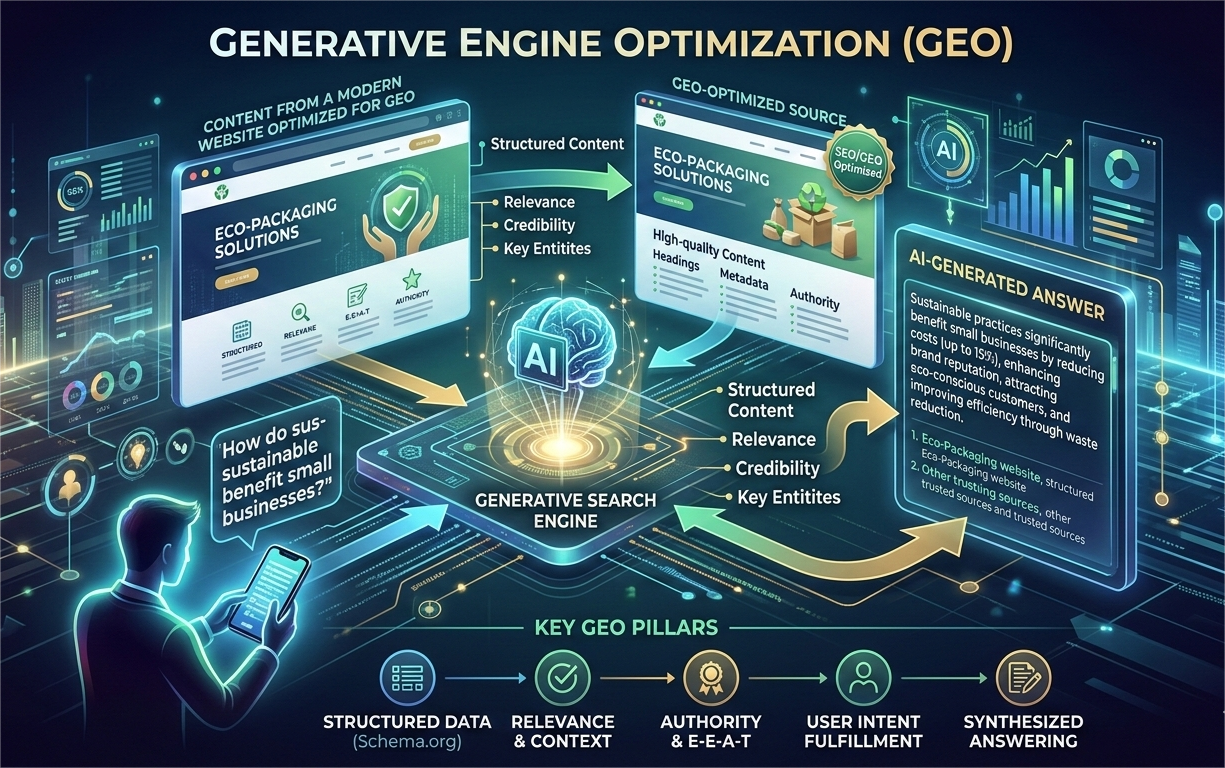
Generative Engine Optimization (GEO) is a newer optimization strategy designed for AI-powered search engines and generative AI tools.
Instead of displaying only a list of websites, generative engines such as Google’s Search Generative Experience (SGE) or AI chat systems generate complete answers by combining information from multiple sources.
In this environment, content visibility depends on whether an AI system references, summarizes, or cites your website in its response.
Key GEO Strategies
To increase visibility in AI-generated results, content should include:
Credible citations and references
Clear factual statements
Statistics and supporting data
Structured content formatting
Authoritative language and expertise
Studies show that including trusted sources, quotes, and verifiable statistics significantly increases the chances that AI systems will reference a webpage in generated responses.
Key Differences Between SEO and GEO
Although both strategies aim to improve visibility, the type of search engine they target and the metrics used to measure success are different.

How to Measure GEO Performance
Because generative search engines operate differently from traditional ones, new metrics and tools are emerging to measure AI search visibility.
Instead of focusing solely on clicks, GEO looks at how often your brand or content appears in AI-generated responses.
Modern tools such as AI search analysis platforms evaluate performance using metrics like:
Brand sentiment in AI responses
Share of voice across AI search platforms
Citation frequency
Overall AI search visibility score
These insights help marketers understand how well their content performs in AI-driven search ecosystems.
Why SEO and GEO Should Work Together
Rather than replacing SEO, GEO complements traditional optimization strategies.
A balanced digital strategy ensures that content appears both in:
Traditional search engine rankings
AI-generated answers and summaries
The most effective content today is designed to satisfy both ranking algorithms and AI interpretation systems.
This means creating structured, authoritative, and informative content that works across all types of search experiences.
The Future of Search: Combining SEO and AI Optimization
As generative AI becomes more integrated into search platforms, digital marketers must adapt their strategies.
Businesses that combine traditional SEO best practices with GEO techniques will have a significant advantage in the evolving search landscape.
By focusing on high-quality content, credible sources, structured information, and user value, brands can maintain visibility regardless of how search engines present information in the future.
Frequently Asked Question
What is the main difference between SEO and GEO?
SEO focuses on ranking webpages in traditional search results, while GEO focuses on optimizing content so it appears in AI-generated responses created by generative search engines.
Can SEO and GEO be used together?
Yes. The best strategy is to combine both approaches. SEO helps your website rank in search results, while GEO increases the chances that AI systems will reference your content in generated answers.
Why is GEO becoming important?
Generative AI tools are increasingly used for search. Instead of browsing multiple websites, users often rely on AI-generated summaries. GEO helps ensure your content appears within those responses.
How can I optimize my content for GEO?
You can improve GEO visibility by adding credible sources, statistics, expert quotes, clear explanations, and well-structured information that AI systems can easily interpret.
Will GEO replace SEO in the future?
No. Traditional search engines are still widely used, so SEO remains essential. However, GEO is becoming an important addition to modern search strategies as AI-powered search continues to grow.
What metrics are used to measure GEO success?
GEO performance is measured through metrics such as citation frequency, brand mentions in AI responses, share of voice in generative search, and overall AI visibility scores.
Ready to Get Started?
Let's discuss how we can help you achieve your goals