


How Dubai Businesses Can Prepare for the Future of Data Privacy
In Dubai’s fast-evolving digital landscape, data privacy is both a legal obligation and a business advantage. Understanding UAE and free zone regulations, implementing robust compliance practices, and preparing for AI-driven changes are critical for protecting customer trust, avoiding fines, and staying competitive.
Digital Compliance in Dubai: What Businesses Must Know
Dubai’s digital economy is booming, but with growth comes responsibility. Navigating the UAE’s multi-layered data protection framework is essential to avoid penalties and safeguard your brand.
Understanding Dubai’s Data Privacy Landscape
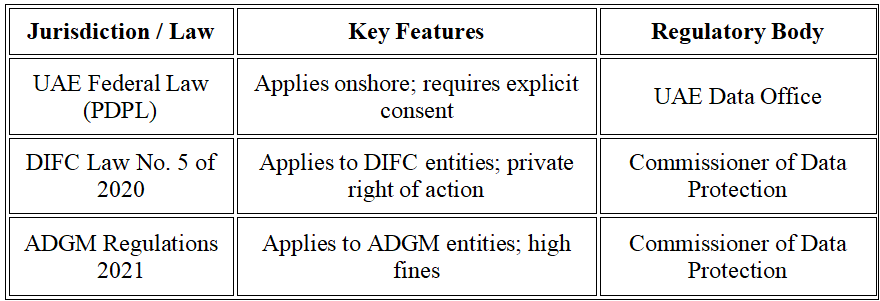
Dubai businesses must comply with multiple overlapping regulations:
1. Federal Law (PDPL)
UAE Federal Decree-Law No. 45 of 2021 sets national standards.
Requires explicit consent for processing personal data.
Enforced by the UAE Data Office.
2. Free Zone Laws
DIFC and ADGM have their own GDPR-aligned regulations.
Include high fines and private rights of action for individuals.
Enforced by their respective Commissioners of Data Protection.
3. Sector-Specific Laws
Banking, healthcare, and telecommunications have additional regulations.
Governed by federal regulators for each sector.
Core Compliance Principles
All Dubai businesses should adopt these fundamental principles:
Lawfulness, Fairness & Transparency – Obtain consent and clearly explain data usage.
Purpose Limitation & Storage – Collect only what is necessary; delete or anonymize data after use.
Data Subject Rights – Respond promptly to access, correction, or erasure requests.
Accountability & Security – Implement measures to prevent unauthorized access, alteration, or destruction of data.
Enforcement Example: Okadoc Technologies was fined for failing to respond to a data access request, highlighting regulators’ active enforcement.
Consequences of Non-Compliance
Ignoring compliance carries serious risks:
Financial Penalties: AED 50,000–5 million onshore; up to $28 million in free zones.
Reputational Damage: Loss of customer and partner trust.
Legal Exposure: Individuals can sue under DIFC’s private right of action, even for non-financial losses.
Future Trends in Digital Compliance

1. AI Regulation
UAE is integrating AI governance into data protection frameworks.
Businesses must ensure transparency, ethical use, and allow users to contest automated decisions.
2. Increased Regulatory Scrutiny
Authorities are shifting from rule-making to active supervision through guidance, self-assessments, and inspections.
3. Cross-Border Data Transfers
Transferring personal data outside the UAE, including between free zones and the mainland, requires legal safeguards.
Action Plan for Dubai Businesses
Conduct a Data Audit – Map all collected personal data and its flow.
Update Policies – Develop privacy notices and internal data protection guidelines.
Appoint a Data Protection Officer (DPO) – Mandatory for sensitive or large-scale processing.
Prepare for Data Subject Requests – Simple, clear processes for access, correction, and deletion.
Train Staff – Reduce human error through ongoing compliance training.
Conclusion
Data privacy is no longer optional—it is a strategic advantage. Businesses that embrace compliance build customer trust, minimize risk, and confidently innovate in Dubai’s digital economy.
Frequently Asked Questions
Q1: What is the PDPL?
A: The Personal Data Protection Law (PDPL) is the UAE’s federal law that regulates personal data collection, processing, and storage across Dubai and the UAE.
Q2: Do free zones like DIFC and ADGM follow the same rules?
A: No, they have their own GDPR-aligned data protection regulations with stricter enforcement and specific rights for individuals.
Q3: What are the penalties for non-compliance?
A: Fines range from AED 50,000 to AED 5 million onshore and can reach $28 million in free zones, with reputational damage and legal exposure also possible.
Q4: How does AI impact compliance?
A: AI regulations require transparency, ethical use, and mechanisms for users to contest automated decisions.
Q5: What steps should Dubai businesses take to comply?
A: Conduct a data audit, update policies, appoint a DPO, prepare for data subject requests, and train staff on compliance practices.
Q6: Is data compliance a competitive advantage?
A: Yes, transparent and secure data practices build trust, strengthen customer relationships, and protect your business from fines and reputational harm.
Ready to Get Started?
Let's discuss how we can help you achieve your goals