

How GEO Marketing Can Revolutionize Your Business Growth
Generative Engine Optimization Marketing (GEO) is a strategic digital marketing approach that focuses on optimizing content for AI-driven search engines and conversational platforms. Unlike traditional SEO, which prioritizes higher search rankings, GEO ensures your brand becomes a trusted source that AI systems cite when answering user queries.
Generative Engine Optimization (GEO) Marketing: Become the AI-Trusted Authority
When someone asks ChatGPT, Google AI Overviews, or Perplexity about your industry, product, or solution, GEO ensures your expertise appears in the response. This isn’t just about generating clicks; it’s about becoming the authoritative voice that AI systems reference, building trust and credibility at scale.
The impact is measurable. Brands implementing GEO strategies saw an 800% year-over-year increase in referrals from large language model platforms in H1 2025—a clear sign that AI-driven discovery is reshaping the marketing landscape.
“GEO isn’t just about visibility. It’s about becoming the default expert that AI systems rely on when your ideal customers seek solutions.”
GEO vs Traditional SEO: Key Differences
Understanding the distinction between SEO and GEO is essential for modern marketing leaders. Both strategies increase visibility, but the environments, metrics, and user behaviors differ significantly.
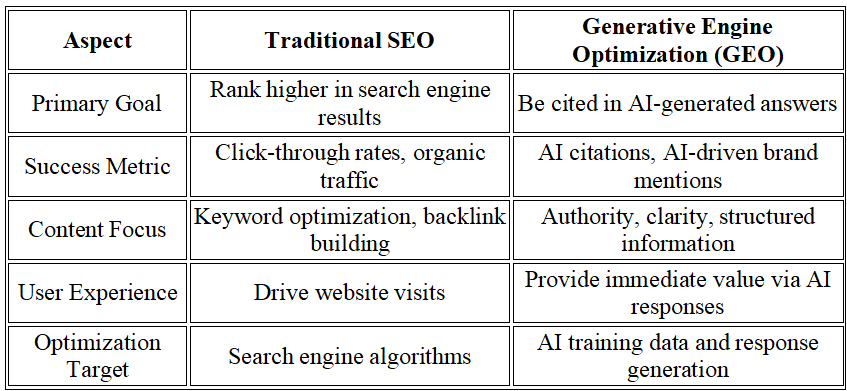
Traditional SEO assumes users will click through links to find answers. GEO recognizes that users increasingly prefer immediate, synthesized answers from AI systems. Marketing shifts from driving clicks to ensuring your content is the most credible, authoritative source AI references.
Why GEO Matters for B2B and SaaS Leaders
AI-driven research tools are rapidly changing B2B buyer behavior. Decision-makers now rely on AI for:
Vendor discovery
Competitive analysis
Solution evaluation
If your competitors are already optimized for AI citations and you’re not, they become the “default expert” in your space. When CMOs ask AI assistants about SaaS tools, marketing automation, or conversion strategies, your company should appear—or risk losing influence.
In research-heavy B2B sales cycles, GEO ensures your company is visible, credible, and authoritative at the earliest stages of decision-making.
Real-World GEO Success Stories
Healthline: Medical Authority in AI Responses
Healthline reorganized its medical content using GEO best practices, including:
Expert-validated definitions
Bullet-point symptom lists
Treatment tables
Schema markup for AI readability
Results:
218% increase in AI citations
43% rise in referral traffic from generative AI platforms
This positioned Healthline as the trusted medical authority for AI-powered health queries.
42DM: B2B Demand Generation
42DM implemented GEO strategies for tech and SaaS clients:
Technical SEO cleanup
E-E-A-T aligned content for conversational queries
Structured data
Trust-signal building
Results:
150 AI-engine clicks
12 AI-overview snippet placements
8% lead-to-demo conversion rate
This demonstrates GEO drives qualified leads, not just visibility.
AI-SEO Services: Hybrid GEO + AEO Approach
By combining GEO with Answer Engine Optimization (AEO), AI-SEO Services optimized for:
Voice assistants
Structured, citation-ready content
Schema markup and summary blocks
Results:
35% increase in featured snippet presence
28% rise in voice-assistant answer rates
22% higher marketing ROI compared to SEO-only tactics
Key Insight: GEO works best as part of an integrated search strategy, complementing traditional SEO.
Core GEO Strategies That Deliver Results

1. Authority-Driven Content Architecture
AI systems prefer credible, expert-backed content. Restructure your content to:
Lead with credentials and data
Include author bios with verifiable experience
Cite primary research and case studies
Highlight measurable outcomes
This establishes your content as AI-preferred authority.
2. Structured Data for AI Comprehension
Make your content parseable by AI systems using:
Comprehensive schema markup
Clear information hierarchies
Tables, numbered lists, and headers
Example: Case studies structured as Challenge → Solution → Results → Takeaways improve AI readability and citation likelihood.
3. Conversational Query Optimization
AI queries are full questions, comparisons, and requests for explanations. Optimize content for:
Complete, specific questions (“How can B2B SaaS companies improve trial-to-paid conversion rates?”)
Comprehensive answers that address the query directly
Educational and comparison guides
“The most successful GEO strategies optimize for humans asking AI increasingly sophisticated questions.”
Getting Started with GEO: Step-by-Step Roadmap
Phase 1: Audit and Assessment (Weeks 1–2)
Audit existing content through AI lenses (ChatGPT, Claude, Perplexity)
Identify gaps where your expertise should appear but isn’t cited
Phase 2: Content Enhancement (Weeks 3–6)
Update high-performing content with:
Author credentials
Structured formatting
Data and examples
FAQ sections addressing related queries
Phase 3: Systematic Expansion (Months 2–3)
Create new AI-optimized content:
Conversational queries
Detailed case studies
Educational guides positioning your company as the definitive source
Consistency and patience are key: GEO results compound over time as AI systems recognize your content as authoritative.
Why B2B Companies Can’t Ignore GEO
Generative Engine Optimization isn’t a temporary trend—it’s a fundamental shift in marketing:
Early adopters see increased qualified leads, higher conversion rates, and stronger brand authority
AI-mediated search is now the first step in buyer decision-making
Brands that aren’t optimized risk invisibility in AI-driven discovery
Start small, start now: every piece of content optimized for AI citation is an investment in future authority and discoverability.
FAQ: Generative Engine Optimization (GEO)
Q1: What is Generative Engine Optimization (GEO)?
GEO is the practice of optimizing digital content for AI-driven search engines and conversational platforms to ensure your brand is cited and referenced in AI-generated answers.
Q2: How does GEO differ from traditional SEO?
While SEO focuses on ranking in search results and driving clicks, GEO focuses on authority, AI citations, and direct AI-driven visibility. Users get synthesized answers, so the goal shifts from traffic to credibility.
Q3: Why is GEO important for B2B and SaaS companies?
Decision-makers increasingly use AI tools for vendor discovery, competitive research, and solution evaluation. GEO ensures your brand is visible and trusted at early research stages.
Q4: What are the core GEO strategies?
Authority-driven content architecture
Structured data and schema markup
Conversational query optimization
FAQ and content cluster development
Consistent entity references across platforms
Q5: How quickly can GEO deliver measurable results?
Authority content: 3–6 months
Structured schema: 2–4 months
Case studies and research: 6–12 months
Results compound as AI systems recognize your content as authoritative.
Q6: Can GEO work with traditional SEO?
Yes. GEO works best in an integrated strategy that combines SEO, Answer Engine Optimization (AEO), and AI citation-focused content.
Q7: How do companies measure GEO success?
Key metrics include:
AI-Generated Visibility Rate (AIGVR)
AI Engagement and Citation Rate (AECR)
AI-driven referral traffic and conversions
High scores in these metrics indicate strong authority and visibility in AI search results.
Ready to Get Started?
Let's discuss how we can help you achieve your goals