

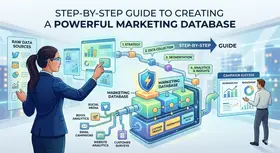
Step-by-Step Guide to Creating a Powerful Marketing Database
Build a powerful database marketing strategy to drive targeted campaigns, improve customer retention, and increase ROI. Learn how to collect internal and external data, segment audiences, and integrate your database into every aspect of your marketing for measurable growth.
How to Build an Effective Database Marketing Strategy
In today’s competitive landscape, every business needs a comprehensive database marketing strategy. While social media and digital advertising dominate attention, a well-maintained customer database can give your business a sustainable edge, reduce marketing costs, and improve ROI.
Here’s how to create a database marketing strategy that drives results:
1. Build an Internal Database
An internal database consists of customers and leads collected directly by your business. Over time, it can deliver impressive results:
Cost Savings: Reduces reliance on expensive advertising channels.
Enhanced Reputation: Shows investors and partners a strong customer base.
How to grow your internal database:
PPC Advertising: Target “top-of-funnel” keywords to attract potential leads and encourage email sign-ups.
Content Marketing & SEO: Rank organically for relevant keywords and offer gated content such as e-books, guides, or newsletters in exchange for contact information.
2. Leverage External Databases
Experienced marketers expand beyond internal lists by using third-party sources to identify potential customers.
Methods include:
Remarketing Lists: Target users who search for specific keywords and retarget them on Google, Facebook, Instagram, and Twitter.
LinkedIn: Use LinkedIn Gen Forms or Sponsored Content to reach business professionals for B2B campaigns.
Facebook Lead Ads: Build Messenger subscriber lists and direct prospects into your CRM for further nurturing.
External databases help marketers reach high-intent audiences at a lower cost while expanding reach efficiently.
3. Retain and Engage Existing Customers
Acquiring new customers is more expensive than retaining current ones. A strong database strategy includes ongoing engagement with loyal customers:
Track customer activity to tailor offers and messaging.
Personalize communication to increase retention and loyalty.
Use segmentation to create a one-on-one experience, improving open rates, click-throughs, and sales.
4. Integrate Database Marketing Across Your Strategy
A database should be at the core of your marketing efforts, guiding campaigns across channels:
Funnel interested audiences from your website, social media, and email campaigns into your database.
Categorize customers based on interests, behavior, and demographics.
Use data insights to improve targeting, optimize campaigns, and increase ROI.
By nurturing your database over time, you create long-term relationships with customers, increase customer lifetime value, and gain a competitive advantage—even with limited advertising budgets.
Frequently Asked Questions
Q1: What is database marketing?
Database marketing is the practice of collecting and leveraging customer and prospect information to run targeted campaigns and improve ROI.
Q2: Why is building an internal database important?
An internal database reduces customer acquisition costs, improves targeting, and enhances your brand’s credibility over time.
Q3: How can external databases help my business?
External databases allow you to reach high-intent audiences using third-party data, remarketing campaigns, and platforms like LinkedIn and Facebook.
Q4: Should I focus on new leads or existing customers?
Both are important, but retaining loyal customers is more cost-effective and increases lifetime value.
Q5: How can I use my database for personalized marketing?
Segment your database by behavior, interests, or demographics to deliver tailored messaging, offers, and campaigns.
Q6: How does database marketing improve ROI?
Targeted campaigns reach the right audience, reduce wasted spend, increase conversions, and allow better allocation of advertising budgets.
Ready to Get Started?
Let's discuss how we can help you achieve your goals