What Are the Advantages of Digital Marketing Over Traditional Marketing?
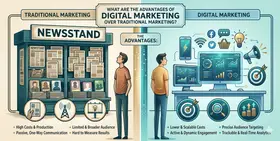
Digital marketing offers businesses a powerful way to reach targeted audiences, reduce costs, and achieve measurable results. With real-time analytics, global reach, and enhanced customer engagement, it has become an essential strategy for driving growth in today’s digital landscape.
Why Digital Marketing Is Essential for Modern Businesses
In today’s fast-paced digital world, marketing has evolved significantly. Businesses are increasingly adopting digital marketing strategies to stay competitive, connect with their audiences, and drive growth. Compared to traditional methods, digital marketing offers greater precision, flexibility, and measurable results—making it the preferred choice for businesses of all sizes.
1. Targeted Audience Reach
One of the biggest advantages of digital marketing is the ability to reach a highly targeted audience. Using data such as demographics, interests, online behavior, and search intent, businesses can create campaigns tailored to specific customer segments.
This targeted approach ensures that marketing efforts reach the right people at the right time, leading to:
Higher engagement rates
Better conversion rates
Reduced wasted ad spend
2. Cost-Effective Marketing Solutions
Digital marketing is far more cost-effective than traditional advertising channels like TV, print, or billboards. Businesses can control their budgets and optimize campaigns based on performance metrics such as:
Cost-per-click (CPC)
Cost-per-acquisition (CPA)
Return on investment (ROI)
This affordability makes digital marketing accessible to startups, small businesses, and large enterprises alike.
3. Measurable Results and Real-Time Analytics
Unlike traditional marketing, digital campaigns provide real-time data and measurable results. Businesses can track performance through key metrics such as:
Website traffic
Conversion rates
Engagement levels
Customer behavior
These insights allow marketers to continuously refine their strategies, ensuring maximum efficiency and improved outcomes.
4. Flexibility and Adaptability
Digital marketing offers unmatched flexibility. Campaigns can be adjusted instantly based on performance data, allowing businesses to:
Modify targeting criteria
Update ad creatives and messaging
Reallocate budgets for better performance
This adaptability ensures businesses can quickly respond to market trends and customer preferences.
5. Stronger Customer Engagement
Digital platforms enable direct interaction between brands and their audiences. Through channels like social media, email marketing, and content marketing, businesses can build meaningful relationships with customers.
This engagement leads to:
Increased brand loyalty
Better customer retention
Stronger brand advocacy
6. Global Reach and Market Expansion
The internet removes geographical barriers, allowing businesses to reach a global audience. Through strategies like SEO and online advertising, companies can expand beyond local markets and connect with customers worldwide.
This global reach opens new opportunities for growth, brand awareness, and revenue diversification.
Conclusion
Digital marketing has become a cornerstone of modern business success. With its ability to target audiences precisely, deliver measurable results, and adapt quickly, it provides a powerful platform for growth and engagement. Businesses that invest in digital marketing are better positioned to compete, scale, and thrive in today’s digital-first environment.
Frequently Asked Questions
Q1: What is digital marketing?
Digital marketing involves promoting products or services using online channels such as search engines, social media, email, and websites.
Q2: Why is digital marketing more effective than traditional marketing?
It allows precise audience targeting, provides measurable results, and is more cost-effective compared to traditional methods.
Q3: Can small businesses benefit from digital marketing?
Yes. Digital marketing is affordable and scalable, making it ideal for businesses of all sizes.
Q4: How does digital marketing improve ROI?
By tracking performance metrics and optimizing campaigns in real time, businesses can maximize returns on their marketing investments.
Q5: What channels are used in digital marketing?
Common channels include SEO, social media, email marketing, content marketing, and paid advertising.
Q6: How does digital marketing help with customer engagement?
It enables direct communication through social media, emails, and interactive content, building stronger relationships with customers.
Q7: Can digital marketing reach global audiences?
Yes. Digital platforms allow businesses to connect with customers worldwide, expanding their reach beyond local markets.
Ready to Get Started?
Let's discuss how we can help you achieve your goals