

From Data to Dollars: The Power of AI-Driven Audience Segmentation
AI-driven audience segmentation is transforming how businesses turn data into revenue in 2026. By leveraging artificial intelligence and advanced analytics, brands can identify high-value audiences, personalize marketing strategies, and optimize campaigns for maximum ROI. This blog explores how AI segmentation works and why it’s essential for modern digital marketing success.
In today’s data-rich digital landscape, businesses are collecting more information than ever before. But data alone doesn’t drive results—how you use it does.
That’s where AI-driven audience segmentation comes in. By turning raw data into actionable insights, AI enables businesses to identify their most valuable customers, predict behavior, and deliver highly targeted campaigns that convert.
In 2026, companies that effectively use AI segmentation aren’t just analyzing data—they’re turning it into measurable revenue.
What is AI-Driven Audience Segmentation?
AI-driven audience segmentation uses machine learning, predictive analytics, and behavioral data to group users based on patterns, intent, and likelihood to act.
Instead of relying on traditional segments like age or location, AI analyzes:
Browsing behavior
Purchase history
Engagement patterns
Real-time interactions
Predictive intent signals
This allows businesses to create dynamic, high-precision audience segments that evolve continuously.
Why AI-Driven Segmentation Matters in 2026
1. Data is Abundant—but Insights Are Rare
Businesses today have access to massive amounts of data, but without AI, it’s difficult to extract meaningful insights. AI bridges this gap by transforming raw data into clear, actionable intelligence.
2. Personalization Drives Revenue
Modern consumers expect personalized experiences. AI segmentation enables brands to deliver:
Relevant product recommendations
Tailored messaging
Customized offers
This leads to higher engagement and increased conversions.
3. Marketing Efficiency is Critical
With rising ad costs, businesses must maximize every dollar. AI helps by:
Identifying high-converting audiences
Reducing wasted ad spend
Improving campaign targeting
How AI-Driven Audience Segmentation Works
Step 1: Data Aggregation
AI collects and integrates data from:
Websites and apps
CRM systems
Social media platforms
Transaction databases
Step 2: Pattern Recognition
Machine learning algorithms analyze user behavior to identify trends and similarities.
Step 3: Predictive Modeling
AI predicts future actions, such as:
Likelihood to purchase
Risk of churn
Engagement probability
Step 4: Dynamic Segmentation
Audiences are continuously updated based on real-time behavior and new data inputs.
Turning Data into Revenue: Key Benefits

1. Higher Conversion Rates
Targeting the right audience increases the likelihood of conversions.
2. Increased Customer Lifetime Value (CLV)
AI helps identify and nurture high-value customers over time.
3. Smarter Campaign Targeting
Campaigns reach users who are most likely to engage and convert.
4. Better Resource Allocation
Marketing budgets are focused on high-impact opportunities.
5. Real-Time Optimization
Strategies can be adjusted instantly based on performance data.
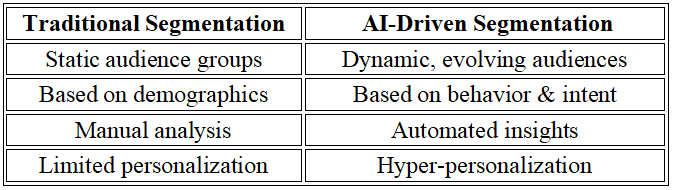
AI Segmentation vs Traditional Segmentation
Real-World Applications
AI-driven segmentation is delivering results across industries:
E-commerce: Personalized product recommendations and retargeting
Finance: Targeting customers with relevant financial products
Healthcare: Improving patient engagement strategies
SaaS: Identifying high-quality leads and reducing churn
Best Practices for Implementation
To maximize the impact of AI-driven segmentation:
Ensure data quality and accuracy
Integrate multiple data sources
Define clear business goals
Combine AI insights with human strategy
Continuously monitor and refine segments
Challenges to Consider
While powerful, AI segmentation comes with considerations:
Data privacy and compliance requirements
Need for skilled implementation
Dependence on data accuracy
Balancing automation with brand consistency
Businesses must adopt a responsible and strategic approach to AI.
The Future of AI-Driven Marketing
Looking ahead, AI-driven segmentation will become even more advanced:
Fully automated customer journey mapping
Real-time personalization across all channels
Predictive campaign execution
Deeper integration with marketing platforms
The future belongs to businesses that can turn insights into action—instantly.
How Agenoria Can Help
At Agenoria, we help businesses transform their data into revenue by:
Implementing AI-driven segmentation strategies
Building intelligent marketing systems
Optimizing campaigns for maximum ROI
Delivering personalized customer experiences at scale
We help you move from data collection to revenue generation.
Frequently Asked Questions
1. What is AI-driven audience segmentation?
It’s the use of artificial intelligence to group audiences based on behavior, intent, and predicted actions.
2. How does it increase revenue?
By targeting high-value audiences with personalized messaging, leading to higher conversions and better ROI.
3. Is it suitable for small businesses?
Yes, many tools make AI segmentation accessible and scalable for businesses of all sizes.
4. What kind of data is needed?
Data from websites, CRM systems, transactions, and customer interactions is typically used.
5. Is AI segmentation compliant with privacy laws?
Yes, when using first-party and consented data, it aligns with modern privacy regulations.
6. How quickly can results be seen?
Businesses often see improvements in engagement and conversions within weeks of implementation.