

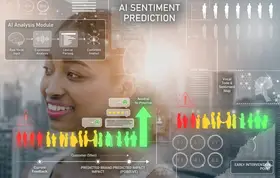
How AI Detects Customer Sentiment Before It Impacts Your Brand
AI-powered sentiment detection enables brands to identify customer emotions in real time—before negative feedback escalates into reputational damage. By leveraging machine learning and natural language processing (NLP), businesses can proactively respond to sentiment shifts, improve customer experience, and protect brand value.
In today’s always-connected world, customer opinions spread faster than ever. A single negative review or viral complaint can impact your brand within hours.
The challenge? Most businesses react too late.
That’s where AI-driven sentiment detection comes in. Instead of waiting for problems to surface, AI helps brands detect emotional signals early, allowing them to act before issues grow into full-blown crises.
What is AI Sentiment Detection?
AI sentiment detection uses artificial intelligence, natural language processing (NLP), and machine learning to analyze customer feedback and determine emotional tone.
It goes beyond simple positive/negative classification to identify:
Frustration or dissatisfaction
Satisfaction and loyalty
Urgency or complaints
Confusion or hesitation
This allows businesses to understand not just what customers say—but how they feel and what they might do next.
Why Early Sentiment Detection Matters
1. Prevents Brand Damage
AI identifies negative sentiment early, allowing brands to resolve issues before they go public or viral.
2. Enables Proactive Customer Support
Instead of reacting to complaints, businesses can reach out first, improving trust and satisfaction.
3. Improves Marketing Effectiveness
Campaigns can be adjusted in real time based on audience sentiment and feedback.
4. Strengthens Customer Relationships
Understanding emotions helps brands build deeper, more meaningful connections with their audience.
How AI Detects Sentiment Before It Escalates
Step 1: Multi-Channel Data Monitoring
AI continuously scans:
Social media platforms
Customer reviews
Support chats and emails
Forums, blogs, and news
Step 2: Natural Language Processing (NLP)
NLP analyzes text for:
Context and tone
Word choice and phrasing
Emotional signals
Step 3: Behavioral & Pattern Analysis
AI detects unusual spikes in negative sentiment or emerging trends that may indicate a growing issue.
Step 4: Predictive Alerts
Advanced systems generate alerts when:
Negative sentiment increases
Customer frustration patterns emerge
Brand perception begins to shift
This allows teams to act before the issue escalates.
Key Benefits for Businesses
Early Risk Detection: Identify issues before they damage your reputation
Faster Response Times: Address customer concerns instantly
Better Decision-Making: Use sentiment data to guide strategies
Improved Customer Retention: Resolve issues before customers leave
Scalable Monitoring: Analyze thousands of conversations simultaneously
Real-World Applications
AI sentiment detection is widely used across industries:
E-commerce: Monitoring product reviews and customer satisfaction
Finance: Tracking trust and sentiment toward services
Hospitality: Identifying guest concerns before negative reviews spread
SaaS: Detecting churn signals from user feedback
Challenges to Consider
While powerful, AI sentiment detection has limitations:
Difficulty detecting sarcasm or cultural nuances
Dependence on high-quality data
Potential bias in AI models
Need for human oversight in complex cases
A hybrid approach—combining AI with human insight—ensures the best results.
The Future of Predictive Sentiment Analysis

AI is rapidly evolving from reactive analysis to predictive intelligence. In the near future, brands will be able to:
Predict customer dissatisfaction before it happens
Automate responses to sentiment changes
Integrate sentiment data across all marketing channels
Deliver emotion-driven personalization at scale
The future of marketing isn’t just data-driven—it’s emotion-aware.
How Agenoria Can Help
At Agenoria, we help businesses stay ahead of customer sentiment by:
Implementing AI-powered sentiment detection systems
Monitoring brand perception in real time
Turning insights into proactive strategies
Enhancing customer experience and engagement
We help you detect, respond, and lead—before sentiment impacts your brand.
Frequently Asked Questions
1. What is AI sentiment detection?
It’s the use of AI and NLP to analyze customer emotions in feedback, reviews, and online conversations.
2. How does it help prevent brand damage?
By identifying negative sentiment early, businesses can respond before issues escalate publicly.
3. Can AI detect sentiment in real time?
Yes. Modern AI systems analyze and update sentiment insights instantly.
4. What data sources are used?
Social media, reviews, customer support interactions, surveys, and online content.
5. Is AI sentiment detection accurate?
It is highly accurate when trained on quality data, but human oversight is still important.
6. Is it compliant with privacy regulations?
Yes, when implemented using consented, first-party data and proper data governance practices.